
Five pillars · Financially intelligent
Financial literacy for kids and teens
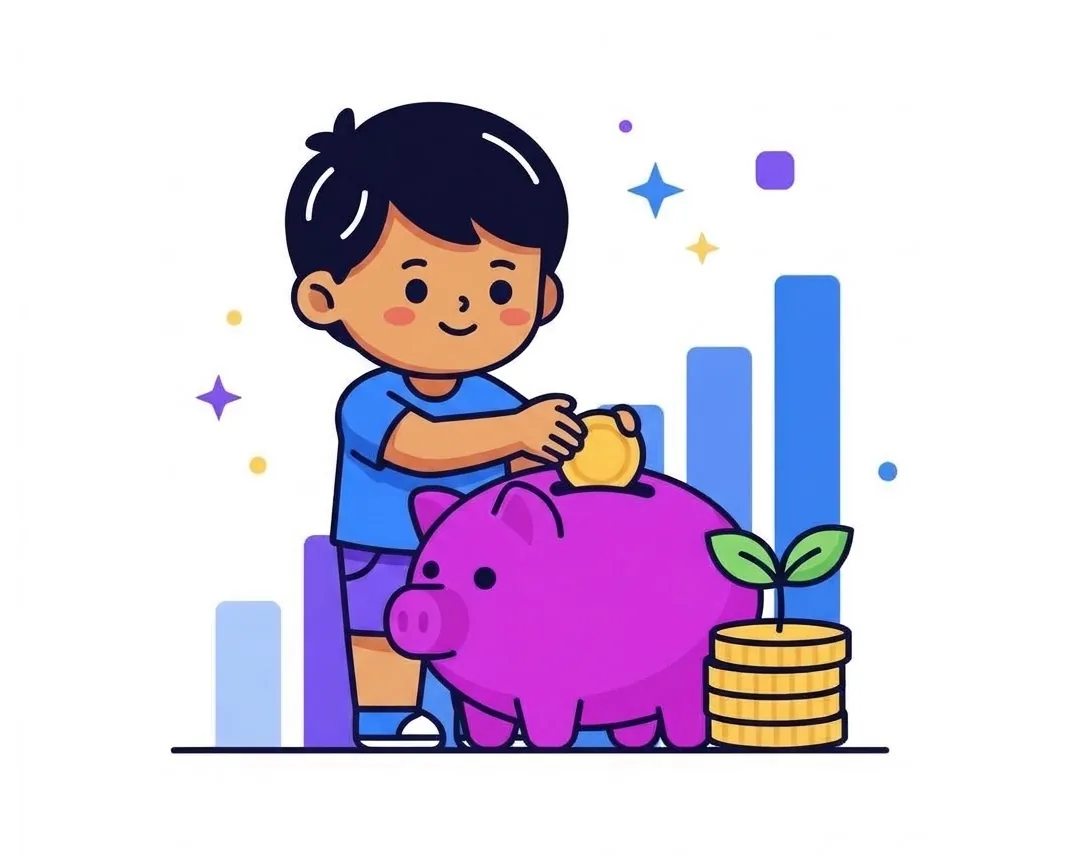
Money skills are life skills. Through games and real-world challenges, we build financial literacy early, so your child understands value, saving, spending wisely and sharing, long before they earn their first salary.
Why it matters
Why money habits start in childhood
Children in Malaysia see money change hands every day, at the shops, online and through e-wallets, but they rarely see the thinking behind it. Without that thinking, it’s easy to grow up spending on impulse or feeling anxious about money. That’s why financial literacy matters from a young age.
Learning about money early, in a safe space where mistakes are cheap, builds habits that last: pausing before buying, setting goals and planning ahead. This is what we mean by financial intelligence. It’s not just knowing what things cost, but making thoughtful choices with what you have.
What your child practises
- Needs versus wants
- Budgeting, saving and goal-setting
- How money is earned, and small enterprise projects
- Spending, saving and sharing wisely
Standard 1 to Form 5
Tailored to your child’s age
Money looks very different to a seven-year-old with a coin and a fifteen-year-old with an e-wallet, so this pillar is taught at the right level for every learner. Take it on its own, or alongside other pillars.
Standard 1–3
Lower primary
- Telling the difference between needs and wants
- Comparing prices and understanding value
- First saving habits, like saving towards a small goal
Standard 4–6
Upper primary
- Making a simple budget and sticking to it
- Understanding how money is earned
- Planning to share, as well as to spend and save
Form 1–5
Secondary
- Managing money, from a weekly budget to bigger purchases
- Enterprise: turning an idea into a small money-making project
- Using money responsibly, including sharing with others
A look inside a session
Each session turns a money idea into something your child can try, test and talk through. A typical session moves through four parts:
- Warm up: a quick money puzzle, like working out how many weeks it takes to save for something.
- Play: a money game or simulation, such as running a pretend stall on a set budget, where choices have real (pretend) consequences.
- Reflect: your child talks it through with their coach: what worked, and what they’d do differently.
- Real-life challenge: one small task to try at home, like using a spend, save and share plan with their pocket money.
How we measure progress in financial literacy
- A starting point from the free assessment
- Results from money games and challenges, tracked over time
- Coach observations of how your child plans and makes choices
- Clear progress reports showing how your child is growing over time
Questions about financial literacy
What is financial literacy?
Financial literacy is the knowledge and habits to manage money well: knowing the difference between needs and wants, budgeting, saving, spending wisely and understanding how money is earned. For children, it starts with simple choices and grows into planning and responsibility.
What age should children learn about money?
Earlier than many parents expect. Young children can start with simple ideas such as needs and wants, waiting for something they want and saving towards a goal. Budgeting and enterprise build on those first steps as they grow, which is how our course is arranged from Standard 1 to Form 5.
How do you teach financial literacy online?
Through games and real-world challenges. Learners practise everyday money decisions, such as planning for a goal, see the results of their choices and talk them through with a coach.
How can I support money skills at home?
Talk about money openly and let your child make small choices with real amounts, such as pocket money. A simple routine like a spend, save and share jar turns everyday moments into practice.
Give your child the boost to lead
Book a free assessment and discover your child’s strengths.
The five pillars
Explore the other pillars
Academically excellent
Sharper focus, stronger memory, and faster, more confident reading in English, so learning improves in every subject.
Emotionally resilient
The confidence to handle pressure, bounce back from mistakes and keep going.
Ethically grounded
Integrity, kindness and the character to do what’s right, even when no one is watching.
Equipped with leadership
Solving problems, speaking up and serving their community.